Skip to content
amavita

About Amavita Sciences™

Built by operators who file into LATAM every week.

Amavita Sciences was founded by two brothers who saw the same problem from opposite ends of the LATAM life-sciences system — the operator running trials into twelve regulators, and the cardiologist reviewing the studies patients rely on.

The translation layer is not built by a language-services vendor bolting a glossary onto a generic model. It is built by the same team that files clinical and regulatory dossiers into COFEPRIS, ANVISA, INVIMA, ANMAT, and the rest of LATAM week after week — and by the clinical leadership that has to trust what those dossiers say.

Why we built this

The translation gap we kept hitting from the inside.

Every month, submissions from global sponsors reach LATAM regulators carrying the same avoidable defects: numerical errors in cited standards, inconsistent regulatory vocabulary, entire clauses dropped from the Spanish version, and English artifacts preserved in Portuguese pages. First-cycle reviews slow. Corrections letters arrive. Sometimes the whole dossier is sent back.

bioaccess® has been filing dossiers into these agencies since 2010, and Amavita Sciences exists because our operators kept catching the same errors on packages we did not write. Rather than run those corrections as a favor, we built the layer that stops them from reaching the reviewer at all — trained on the vocabulary LATAM regulators actually use, and staffed by the people who read those regulations for a living.

The founders

Two brothers. One side of the file, and the other.

Julio runs the LATAM regulatory operator that files these dossiers. Pedro leads the clinical practice that reviews the studies they enable. Between them, they have spent more than four decades inside the paperwork, the procedures, and the regulators that decide which devices and therapies reach LATAM patients.

Portrait of Julio G. Martinez-Clark

Founder & CEO

Julio G. Martinez-Clark

CEO, bioaccess® · IAOCR Ambassador for the Americas · Host, Global Trial Accelerators™

Julio is the CEO of bioaccess®, the Miami-based contract research organization he founded in 2010 to run first-in-human and early feasibility studies for MedTech, BioPharma, and Radiopharma companies across Latin America, Eastern Europe, and Australia. Over two decades, he has partnered with 100+ sponsors on accelerated regulatory approvals and cost-effective clinical trials worldwide.

In October 2024, he was named Ambassador of IAOCR/GCSA for the Americas, leading the regional implementation of ICH-GCP, FDA, and UNESCO-aligned accreditation frameworks across sites in the region. He is Board Chairman of AVANZAR, the Colombian Association for the Advancement of Clinical Research, and works with the Cámara de Comercio de Barranquilla to position the city as a regional clinical trial hub.

Julio hosts the weekly Global Trial Accelerators™ podcast, has published 23 articles in Med Device Online since 2018, and holds an MBA in Operational Strategy from Western New England University and a BS in Electronics Engineering from Saint Thomas University in Bogotá.

  • CEO, bioaccess®
  • IAOCR Ambassador for the Americas
  • Board Chairman, AVANZAR — Colombia
  • MBA, Western New England University
  • 100+ sponsors served
  • 23 articles in Med Device Online

Full bio at juliomartinezclark.com →

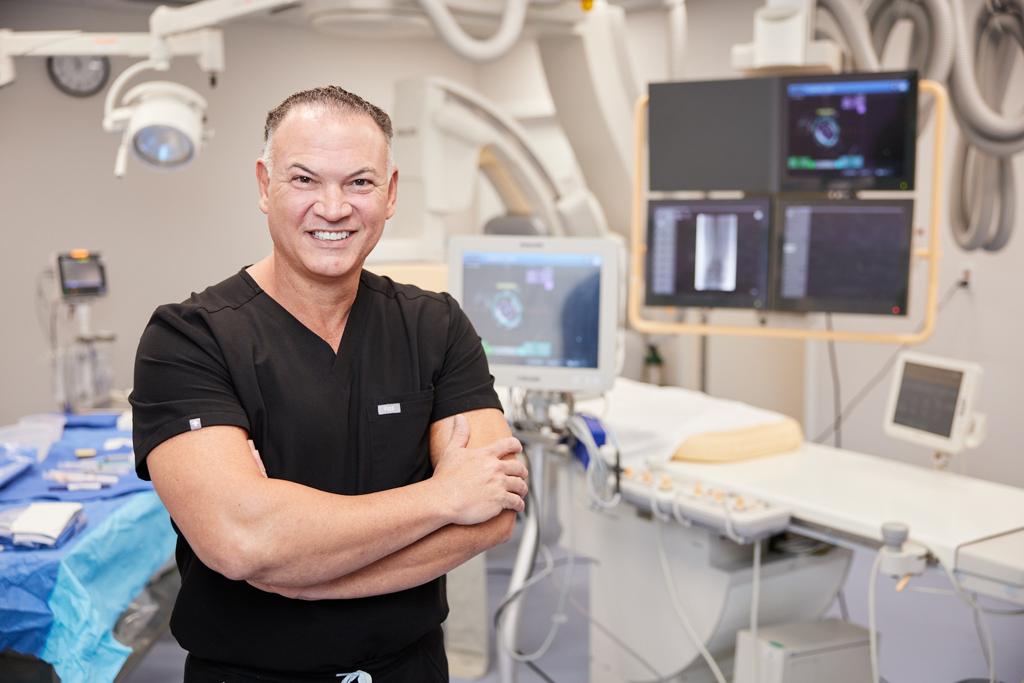
Portrait of Dr. Pedro Martinez-Clark

Founder & Chief Clinical Advisor

Dr. Pedro Martinez-Clark, MD, FACC

Interventional Cardiologist · Founder, Amavita Heart and Vascular Health® · Miami, FL

Pedro is a Harvard-trained, board-certified interventional cardiologist with more than two decades of cardiovascular experience and the founder of Amavita Heart and Vascular Health® in Miami. He is board-certified by the ABIM in Internal Medicine, Cardiovascular Disease, and Interventional Cardiology, and a Fellow of the American College of Cardiology (FACC).

His clinical focus is minimally invasive cardiac catheterization, coronary revascularization, peripheral vascular interventions, and structural heart disease. He works alongside Dr. William O'Neill — the interventional cardiology pioneer who developed angioplasty for heart attacks — and served as National Principal Investigator for the Edwards PARTNER, Protect II, and Protect IV trials. He has authored 300+ peer-reviewed publications and received the TCT Lifetime Achievement Award. Formerly Executive Dean for Clinical Affairs at the University of Miami Miller School of Medicine.

Pedro anchors the clinical judgment behind Amavita Sciences™: he sets the standard for what a Spanish translation of a clinical protocol or investigator brochure has to preserve for a physician to trust it at bedside.

  • Harvard Medical School–trained
  • ABIM: Internal Medicine, Cardiovascular Disease, Interventional Cardiology
  • Fellow, American College of Cardiology (FACC)
  • National PI: PARTNER, Protect II, Protect IV
  • 300+ peer-reviewed publications
  • TCT Lifetime Achievement Award

Full clinical bio at amavita.health →

Why we exist

We built this because we ran into it ourselves.

In the mid-2000s, before Amavita Sciences™, before bioaccess®, we were running a transcatheter mitral valve repair trial for Mitralign — a Boston structural heart startup working on percutaneous annuloplasty for functional mitral regurgitation.

The trial ran in Colombia and Brazil. The clinical work was executed at pace: 18-day ethical approval versus a 6-month EU average. 11 patients enrolled in 8 weeks versus a 24-week EU average. EU submission delivered 14 months ahead of schedule. Mitralign later went on to become part of the Edwards Lifesciences transcatheter mitral pathway.

But every dossier, every amendment, every regulator correspondence had to be re-translated from scratch. Terminology drifted between the Colombia INVIMA package and the Brazil ANVISA package. Every submission was a bespoke rebuild. The clinical execution was 5x faster than Europe. The language layer was slower than everything else combined.

Amavita Sciences™ is the language infrastructure we wish we'd had for the Mitralign trial. Twelve LATAM regulators. One workflow. No terminology drift. No English pivot. That is the entire product thesis.

Metrics reported in Clinical Research News Online, August 2025.

What this means for you

What our background changes about the file that lands on the reviewer's desk.

01

A regulator-first vocabulary, not a language-services glossary.

Our terminology base is drawn from the resolutions, decrees, and circulars that COFEPRIS, ANVISA, INVIMA, ANMAT, and the rest of LATAM actually publish — because the same team reads them for bioaccess® filings. Every entry in the matrix cites its primary instrument.

02

Clinical judgment on the review side.

Translations of investigator brochures, informed consents, and clinical protocols are reviewed against the clinical realities of the procedures they describe. Pedro's practice anchors the standard: the Spanish version has to be usable at bedside, not merely correct in the abstract.

03

A CRO-grade audit trail from day one.

Every deliverable ships with a bilingual page-by-page layout, a certificate of translation, and a four-tier findings report (Critical, High, Medium, Low) with source citations. Correction cycles are included — not billed as scope creep.

Standards our team reads for a living

  • ICH-GCP
  • ISO 14155
  • ISO 13485
  • IEC 60601
  • IEC 62304
  • UNE-EN alignment
  • INVIMA
  • COFEPRIS
  • ANVISA
  • ANMAT
  • ISP
  • DIGEMID
  • ARCSA
  • MINSA
  • HIPAA-eligible BAA
  • zero-retention pipeline

Amavita Sciences is not a sworn or official translator. Traducción Oficial and Tradução Juramentada are legally reserved titles held by individually licensed translators. Standards listed above are the frameworks our operators file against on behalf of sponsors; they are not a claim of certification.

Questions we hear

Frequently asked questions.

Who founded Amavita Sciences™?

Julio G. Martinez-Clark — CEO of bioaccess®, IAOCR Ambassador for the Americas — and Dr. Pedro Martinez-Clark, a Harvard-trained interventional cardiologist with 300+ peer-reviewed publications and founder of Amavita Heart and Vascular Health.

Meet the founders

Why does Amavita Sciences™ exist?

Because the LATAM regulatory language layer is missing infrastructure. After running trials across Colombia, Brazil, Mexico, and Argentina, we built the language operating system we wished we had had for the Mitralign trial.

Read the reason

What is the origin story?

The Mitralign trial in Colombia and Brazil surfaced every failure mode of ad-hoc translation: mismatched terminology, missing sworn certification, repeated regulator queries. Amavita Sciences™ is the language infrastructure we built in response.

Read the origin story

What standards does Amavita Sciences™ operate under?

IAOCR-benchmarked workflows, ISO-aligned linguistic QA, sworn certification chains, and jurisdiction citations against the actual resolution, decree, or circular in each of the 12 LATAM regulators we cover.

Standards and citations

What does this mean for a sponsor sending a document?

You receive a submission-ready artifact — sworn where required, jurisdiction-cited, bilingual layout, timestamped audit trail — from an operator team that has actually filed in the country you are filing in.

What this means for sponsors

Next step

Read the matrix before you send us a file.

The country-by-country matrix cites the resolution, decree, or circular behind every language requirement in LATAM. Your regulatory affairs team can verify our reading against the primary instrument before any document leaves your building.